

 16
16 0
0Summary
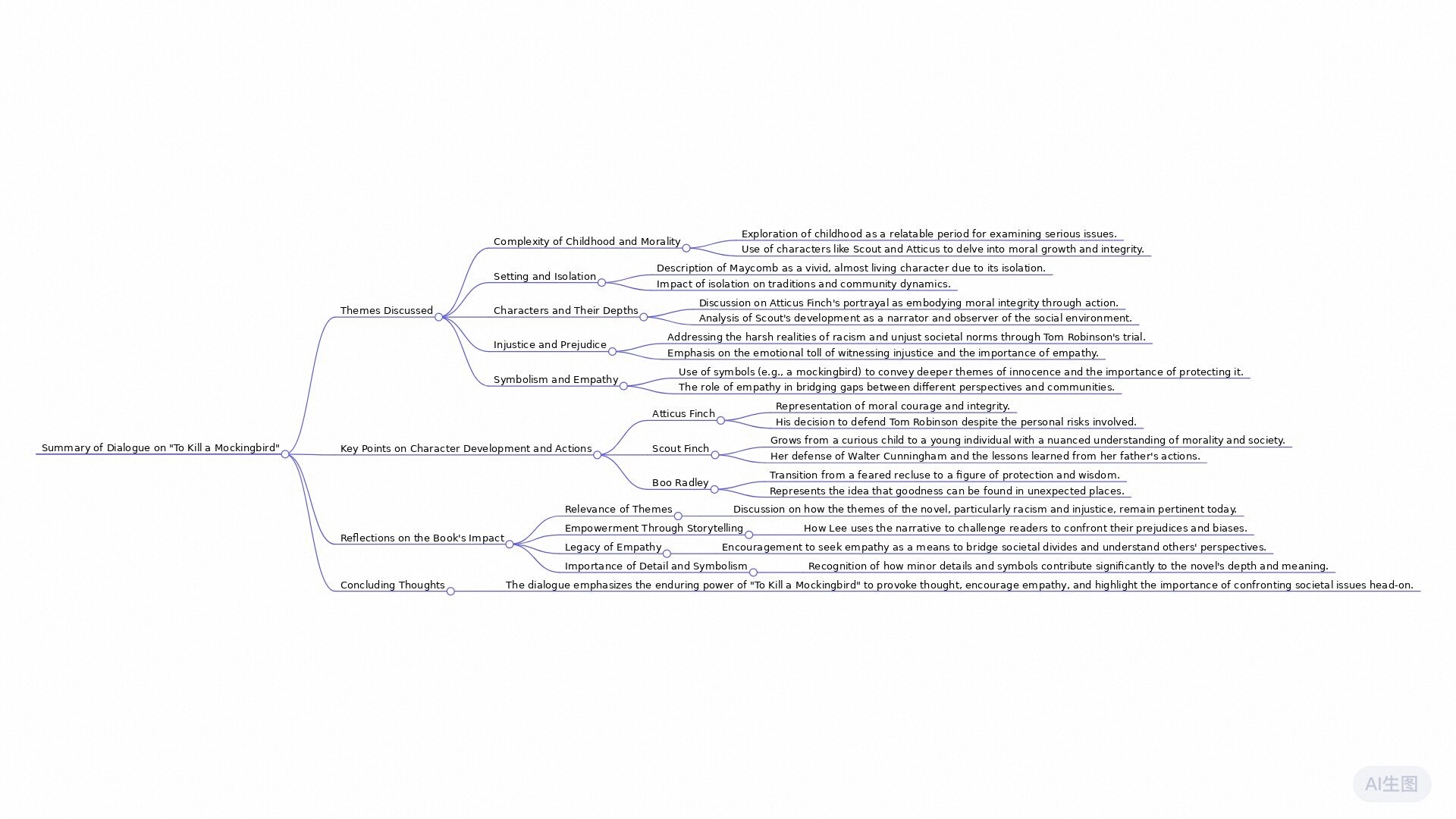
This dialogue explores the profound use of childhood experiences and a tight-knit town setting by Harper Lee to delve into critical themes including moral righteousness, adherence to societal norms, and the intricate facets of human behavior. It underscores the influence of established traditions and the ensuing conflict with innovation, illuminating the significance of moral courage in challenging prevailing opinions. Through the lens of a young individual and their parent's confrontation with racial prejudices within their community, it portrays the detrimental effects of bias and fear, alongside the pursuit of fairness and justice. Despite facing significant adversity, the unwavering resolve to protect innocence reveals the potential for personal bravery and societal reform. Moreover, the discussion highlights how prejudice can engender grave outcomes, yet it also posits that empathy and narrative inquiry have the power to foster understanding and uncover the essence of humanity beyond superficial judgments. This exploration not only condemns prejudiced practices but also celebrates the capacity for kindness and truth-telling as vital components of societal evolution.
Timeline
00:00 Exploring Moral Integrity and Isolation in a Southern TownThe dialogue delves into how Harper Lee uses childhood experiences and a small, isolated town to explore themes of moral integrity, social convention, and the complexity of human nature. It highlights the impact of tradition and resistance to change on individuals' lives and emphasizes the importance of standing up for what is right, regardless of popular opinion.
02:02 Fighting Injustice: A Deep Dive into 'To Kill a Mockingbird'The narrative explores themes of prejudice, fear, and the quest for justice through the trials of a young girl and her father in a racially divided community. Despite facing overwhelming opposition, the father's determination to defend an innocent man highlights the power of courage and the enduring struggle against systemic injustices.
03:42 Prejudice and Empathy: Themes in To Kill a MockingbirdThe dialogue explores how prejudice can lead to devastating consequences, yet moments of empathy and understanding offer hope. It highlights the importance of looking beyond appearances and emphasizes the power of storytelling to reveal deeper truths about human nature.