


 1959
1959 66
66每个人都拥有着不同的人格特质,但我们对于这些特质,它从何而来、以及它们将如何影响人生抉择似乎知之甚少。为什么我们会敏感内耗?为什么有些人职业发展更顺利,而有些人会受挫?为什么我们难以理解自己和他人?为什么我们难以找到兴趣和激情?为什么我们感到空虚?为什么我们难以和他人建立深入的关系?为什么我们难以改善这些让我们感到不舒服的状态?
我们还会通过42位美国总统的政治表现,来具象化的解释这些人格特质将会给我们带来的影响,为什么有些总统会被认为富有人格魅力、更擅长于说服公众?为什么有些总统更容易陷入弹劾?为什么有些总统能赢下多数票,而有总统些虽然一样拥有难以估量的权力,却仍然不被认为是历史上举足轻重的人物?这些差异将会帮助我们更好的理解我们自己,更好的发掘自己的潜能。
这期播客我想用自恋作为理论框架,和大家一同探索我们自己和自己的关系。
时间线:
开头 - 0:17
什么是自恋 - 4:45
自恋的成因 - 11:33
认知失调 (Cognitive Dissonance) - 15:16
自恋的美国总统与其政治表现 - 19:26
成长环境导致个体的元认知缺陷(meta-cognitive deficits)- 25:57
身份认同障碍(Identity impairment)与自恋受损(Narcissistic injury) - 30:39
自体客体(self-object) - 37:11
真假自体 - 45:54
情绪黑洞与空虚 - 50:49
成长环境的诅咒 - 54:37
欢迎通过邮箱联系我们:brainopener2023@gmail.com
参考文献(部分):
Dimaggio, G. et al. (2002) ‘Metacognition, states of mind, cognitive biases, and interpersonal cycles: Proposal for an integrated narcissism model.’, Journal of Psychotherapy Integration, 12(4), pp. 421–451. doi:10.1037//1053-0479.12.4.421.
D’Agostino, A. et al. (2020) ‘The feeling of emptiness: A review of a complex subjective experience’, Harvard Review of Psychiatry, 28(5), pp. 287–295. doi:10.1097/hrp.0000000000000269.
Given-Wilson, Z., McIlwain, D. and Warburton, W. (2011) ‘Meta-cognitive and interpersonal difficulties in overt and covert narcissism’, Personality and Individual Differences, 50(7), pp. 1000–1005. doi:10.1016/j.paid.2011.01.014.
Harmon-Jones, E. and Mills, J. (2019) ‘An introduction to cognitive dissonance theory and an overview of current perspectives on the theory.’,Cognitive dissonance: Reexamining a pivotal theory in psychology(2nd ed.)., pp. 3–24. doi:10.1037/0000135-001.
Huprich, S.K. and Nelson, S.M. (2014) ‘Malignant self-regard: Accounting for commonalities in vulnerably narcissistic, depressive, self-defeating, and masochistic personality disorders’, Comprehensive Psychiatry, 55(4), pp. 989–998. doi:10.1016/j.comppsych.2013.09.017.
Kealy, D. and Ogrodniczuk, J.S. (2014) ‘Pathological narcissism and the obstruction of Love’, Psychodynamic Psychiatry, 42(1), pp. 101–119. doi:10.1521/pdps.2014.42.1.101.
Levy, S.T. (1984) ‘Psychoanalytic perspectives on emptiness’, Journal of the American Psychoanalytic Association, 32(2), pp. 387–404. doi:10.1177/000306518403200207.
Littrell, S., Fugelsang, J.A. and Risko, E.F. (2024) ‘The metacognitive abilities of narcissists: Individual differences between grandiose and vulnerable subtypes’,Personality and Individual Differences, 221, p. 112570. doi:10.1016/j.paid.2024.112570.
Littrell, S., Fugelsang, J. and Risko, E.F. (2019) ‘Overconfidently underthinking: Narcissism negatively predicts cognitive reflection’, Thinking & Reasoning, 26(3), pp. 352–380. doi:10.1080/13546783.2019.1633404.
Mao, Y. et al. (2016) ‘Reduced frontal cortex thickness and cortical volume associated with pathological narcissism’, Neuroscience, 328, pp. 50–57. doi:10.1016/j.neuroscience.2016.04.025.
Morrison, A.P. (1983) ‘Shame, Ideal Self, and narcissism’, Contemporary Psychoanalysis, 19(2), pp. 295–318. doi:10.1080/00107530.1983.10746610.
Määttä, M. and Uusiautti, S. (2018) ‘“my life felt like a cage without an exit” – narratives of childhood under the abuse of a narcissistic mother’, Early Child Development and Care, 190(7), pp. 1065–1079. doi:10.1080/03004430.2018.1513924.
Ronningstam, E. and Baskin-Sommers, A.R. (2013) ‘Fear and decision-making in narcissistic personality disorder—a link between psychoanalysis and Neuroscience’, Dialogues in Clinical Neuroscience, 15(2), pp. 191–201. doi:10.31887/dcns.2013.15.2/eronningstam.
Sewaid, A., Silaghi, F. and García-Cestona , M. (2024) Learning from failure: Do narcissists learn?- small business economics, SpringerLink. Available at: link.springer.com (Accessed: 16 September 2024).
‘Supplemental material for the intricate role of dissociation in the relations between childhood maltreatment, self-objectification, and narcissism’ (2019) Psychological Trauma: Theory, Research, Practice, and Policy [Preprint]. doi:10.1037/tra0000452.supp.
Watts, A.L. et al. (2013) ‘The double-edged sword of grandiose narcissism’,Psychological Science, 24(12), pp. 2379–2389. doi:10.1177/0956797613491970.
Zamostny, K.P., Slyter, S.L. and Rios, P. (1993) ‘Narcissistic injury and its relationship to early trauma, early resources, and adjustment to college.’, Journal of Counseling Psychology, 40(4), pp. 501–510. doi:10.1037//0022-0167.40.4.501.
Music Copyright:
Music from #Uppbeat (free for Creators!): uppbeat.io License code: JMZPHAT8CUM405NY
Music from #Uppbeat (free for Creators!): uppbeat.io License code: YFBEBIVXFXTR3TVC


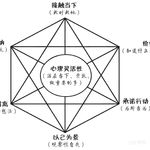












我们的不自爱所制造的痛苦感受为了寻求安抚,令自己也变成了自恋的人,幻想完美自我,追求外界正反馈;以前我觉得自己并不是一个完美主义者,渐渐发现我很难在内心承认我有不好的一面,不好的时候,责怪自己以前好像是有一些令人觉得羞耻的事情,不去接纳、爱那个有错误的自己,这何尝不是一种完美主义呢?
而主播所说的理论又在此跳脱、延伸;对所谓灵魂伴侣的反驳,是过度的将别人作为自己的自我课题,我们应该尊重另一半要有自己的需求和想法;消费主义的桎梏,以外物作为自己情绪变换的准则,而放弃以自我的感受为中心……听到这些我就在想不满足自恋我们应该做什么呢:做自己!尽管做自己或许会带来对方不好的看法,只要我有尊重别人的边界,做自己就要比获取别人的认同更加重要。不过更可悲的是,我不能一直做自己擅长、轻松的事,或许我应该去爱上我所要做的事。
自恋所伴发的自卑问题相对而言是更难改变的吧,感受与想法是相伴而生的,它们早以根植于潜意识当中;外在是随机偶然的世界,这种不稳定的反馈也为自以为的不足提供环境。人皆会追求与朋友亲和等各种心理需求,这是天生的,不可不接受,只是你越重视什么,什么就越分解你的自我课题,自我的追求是不是困住一个人的鸟笼呢,鸟笼里的鸟被困在里面却又好像是自由的。