
 8
8 0
0Summary
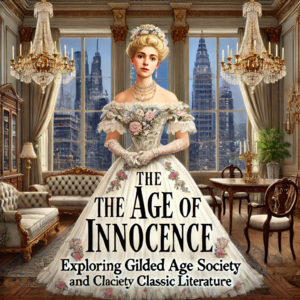
The dialogue explores Edith Wharton's novel "The Age of Innocence," focusing on the societal norms, love, duty, and individual desires within 1870s New York high society. The conversation outlines the novel's setting, characters, and themes, particularly the conflict between societal expectations and personal desires. It highlights the protagonist, Newland Archer, torn between his duty to fiancée May Welland and his attraction to Ellen Olenska, an unconventional woman. The dialogue delves into the broader themes of appearances versus reality, societal constraints, and the consequences of personal choices. Wharton's use of characters and their experiences is analyzed to question the nature of happiness, freedom, and societal structures. The conversation concludes by reflecting on the novel's enduring relevance, encouraging listeners to consider their perspectives on personal identity, societal expectations, and the courage to navigate these constructs.
Speaker 1:He delves into Edith Wharton's "The Age of Innocence," exploring the societal norms and expectations of 1870s New York high society, highlighting the intricate dance of manners and expectations that defined the time. The speaker focuses on key characters such as Newland Archer, engaged to the conventional May Welland, and the scandalous Countess Ellen Olenska, who challenges societal norms and acts as a catalyst for change. He discusses the novel's broader themes, including the nature of a "good marriage" within societal constraints, the internal conflict between adhering to norms and following one's heart, emphasizing the historical context as a timeless commentary on human nature, relationships, and the struggle for individuality. Throughout the dialogue, He employs vivid language to illustrate the tension and inner turmoil faced by the characters, particularly Newland Archer, caught between duty and desire, and reflects on the sacrifices made in the name of tradition and the yearning for authenticity and freedom. In wrapping up, He contemplates the novel's unresolved questions and its lasting impact, inviting listeners to reflect on their own lives and societal rules, emphasizing "The Age of Innocence" as a thought-provoking work that encourages introspection and reevaluation of values and choices.
Speak 2:He delves into an intricate analysis of Edith Wharton's "The Age of Innocence," highlighting the novel's exploration of social conventions, personal desires, and the tension between individual inclinations and societal expectations in 1870s New York high society. The narrative centers on Newland Archer, whose engagement to the seemingly ideal May Welland clashes with his attraction to the scandalous Countess Ellen Olenska. This conflict underscores the central theme of appearances versus reality, with Wharton illustrating the sacrifices required to uphold social standing and reputation. The speaker notes the portrayal of society as a rigid system governed by family, wealth, and respectability, where social actions bear significant consequences. Through characters like Newland, Ellen, and May, Wharton presents the societal pressures and internal conflicts they face, emphasizing the novel's invitation for readers to contemplate the true costs of conforming to societal norms. The dialogue concludes by acknowledging the novel's lasting impact, urging readers to question societal rules and the sacrifices made for adherence to them, positioning "The Age of Innocence" as a profound exploration of personal freedom versus societal constraints.
