

 56
56 0
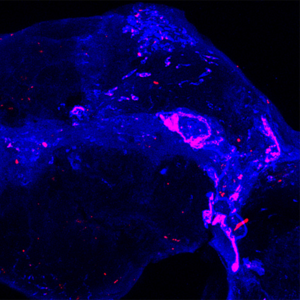
0摘要:2025年4月3日,加州大学旧金山分校的神经生物学家们发表了研究性文章,他们发现雌性小鼠脑脊膜调节性 T 细胞 (mTreg cells) 能够抑制痛觉反应,其机制是:脑脊膜调节性 T 细胞产生的内啡肽 (opioid enkephalin) 通过 MrgprD+ 神经元表达的delta opioid 受体发挥抗伤害性感受作用。
Text:

Unlike the combative immune cells that protect us from pathogens, regulatory T cells (Tregs) are nurturers. They salve inflammation, promote healing of injured tissue, and rein in immune attacks to curb self-inflicted damage.Now, a study of mice reported today in Science suggests some Tregs also act on nerve cells to quell a specific type of pain—but only in females. Why only female rodents seem to benefit remains unclear, but researchers hope they might someday enlist these Tregs to address pain conditions, many of which disproportionately affect women.
“It’s a very impressive paper,” says neuroscientist Gila Moalem-Taylor of the University of New South Wales Sydney, who wasn’t connected to the research. The study “uses elegant, sophisticated methods to conclusively demonstrate the mechanisms” by which the cells reduce one kind of sensitivity to pain, she says.
Tregs, a type of white blood cell, are best known for their role in keeping the immune system in balance and preventing autoimmunity. But researchers have recently found that they also help control pain. For example, a 2021 study by neuroscientist Allan Basbaum of the University of California San Francisco (UCSF) and colleagues showed that Tregs reduce mice’s sensitivity to pain triggered by other immune cells that reside in the brain and spinal cord. That research and additional work suggested Tregs influence pain by targeting various immune cells and tamping down inflammation. But these studies left open the possibility that Tregs might also directly affect pain-sensing nerve cells. Basbaum, his postdoc Élora Midavaine, UCSF dermatologist Sakeen Kashem, and their colleagues launched the new study to nail down how the regulatory cells curb pain.
They focused on Tregs that dwell in the meninges—the membranes that sheathe the brain and spinal cord—and in similar nearby membranes. The cells are much more abundant in these structures than elsewhere in the nervous system. To find out whether the cells affect pain perception, the scientists used genetically engineered mice whose Tregs are vulnerable to a toxin produced by the bacteria that cause diphtheria. Injecting this toxin into the meninges in the lower back killed about 90% of the Tregs in the membranes without harming Tregs in the rest of the body.
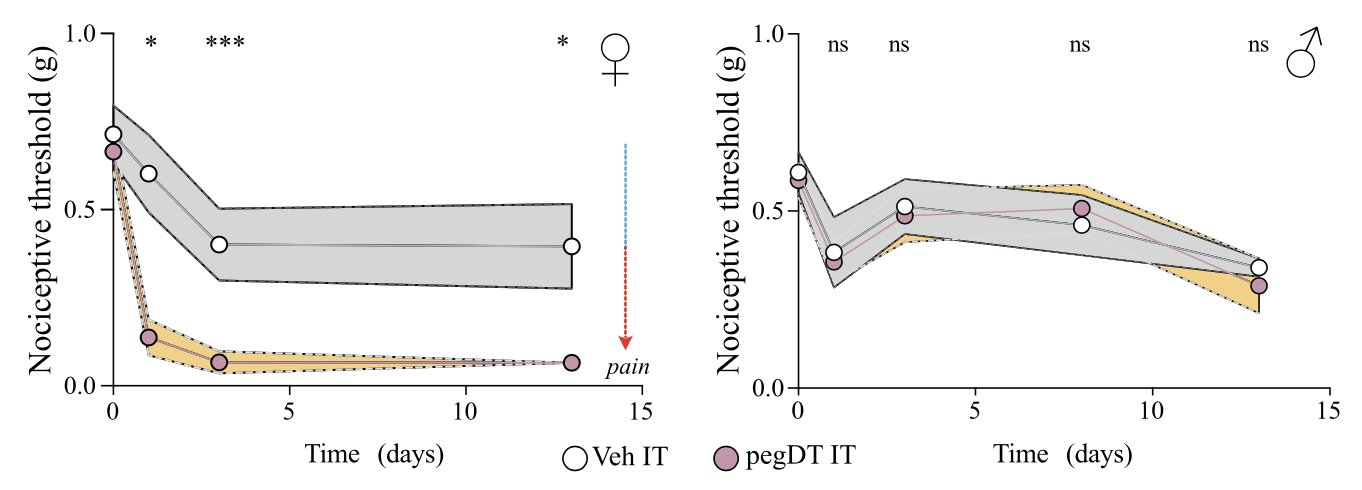
The scientists then measured the animals’ responsiveness to pain by prodding their feet with hairlike fibers of varying flexibility. The stiffer the fiber necessary to induce a mouse to pull its foot away, the lower the animal’s presumed sensitivity to pain. In female mice, the researchers found, culling Tregs in the meninges caused pain sensitivity to shoot up. Loss of Tregs did not have the same effect in male mice, however, and it didn’t alter either sex’s responsiveness to heat, cold, and other types of painful stimulation.
Boosting Tregs, on the other hand, appeared to blunt painful stimulation. In mice with higher pain sensitivity because of nerve damage, increasing the number of Tregs with injections of the immune system protein IL-2 counteracted this hypersensitivity—but again, only in females. To further probe this sex-specific effect, the researchers surgically removed the ovaries from female mice or gave them a drug that blocks the effects of estrogen. In both cases, IL-2 did not reduce pain sensitivity. The researchers’ findings suggest female sex hormones somehow help control the pain-reducing functions of Tregs.
Previous work revealed that Tregs pump out pain-suppressing molecules known as enkephalins. By performing bone marrow transplants with genetically engineered stem cells, the researchers produced mice in which the diphtheria toxin could kill blood cells that made enkephalins while sparing other body cells that fashioned the signaling molecules. Shots of the toxin caused the number of Tregs in the animals to fall and their pain sensitivity to rise.
…(行文至此,加入听友群,可获得完整文稿和文章解读)
原文链接:www.science.org
研究来源:
词汇:nurturer n. 养育者;salve v. 缓和;rein v. 约束;curb v. 控制;self-inflicted adj. 加于自身的;quell v. 减轻;disproportionately adv. 不成比例地;tamp down 抑制;dermatologist n. 皮肤学者; nail down 确保某事发生; sheathe v. 覆盖;vulnerable adj. 易受伤害的;diphtheria n. 白喉;prod v. 刺;cull v. 选择性杀死;shoot up 迅速上升;estrogen n. 雌性激素;pump out 频繁地生产某物;enkephalin n. 内啡肽;spare v. 使…不受伤害
欢迎大家在评论区与我互动,给我写邮件1978500617@qq.com,或加入听友群 Daily Life Science group 1

欢迎大家关注我的小宇宙读书播客《启真书汇》,将陆续更新政治历史、经济金融、管理学、哲学、心理学和社会学等书籍的深度解读,月更。
欢迎大家关注我的微信公众号《思无涯-Gilly》,代谢与免疫前沿研究文献深度解读,月更。

本期制作:Gilly
热爱可抵岁月漫长~
