
 3
3 0
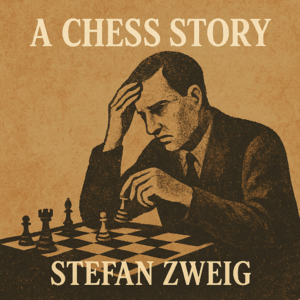
0This episode explores Stefan Zweig's A Chess Story, a novella written during his exile in 1941, reflecting his despair over Europe's collapse into fascism. The story delves into psychological torment through a chess match between a brute champion and a traumatized intellectual, symbolizing the clash between mindless force and fragile humanism. It examines isolation, mental survival, and the paradox of intellect as both refuge and prison.
- Introduction to A Chess Story: A dense, devastating novella written under extreme circumstances, serving as Zweig’s final message.
- Historical Context: Zweig’s exile, the destruction of his intellectual world, and parallels to the novella’s themes.
- Characters and Symbolism: The chess match as a metaphor—brute force (fascism) vs. fractured intellect (humanism).
- Dr. B’s Torture and Madness: Solitary confinement as psychological warfare; chess becomes his salvation and downfall.
- The Final Game: Dr. B’s breakdown and ambiguous retreat—triumph or surrender?
- Zweig’s Legacy: Literature as testimony, not salvation, capturing the horror of a collapsing world.
- Closing Reflection: The mind as both sanctuary and prison; walking away as the last resistance.
Timestamps
Stefan Zweig's Chess Story: A Psychological Powerhouse
Dive into Stefan Zweig's 'A Chess Story,' a compact yet explosive novella that delivers a profound emotional impact. Written under extreme conditions, its intensity is palpable on every page, proving that great literature isn't measured by length but by the depth of its punch.
Decoding a Dense Masterpiece: The Urgency Behind Zweig's Final Work
Unpacking a literary time capsule, this deep dive reveals how a book written in exile captures the psychological terror of a collapsing world—proving its eerie relevance today. More than fiction, it's Zweig's desperate message in a bottle.
Stefan Zweig's Exile: Writing Amidst Europe's Collapse
In 1941, literary giant Stefan Zweig penned his chess masterpiece while stateless in Brazil, watching from afar as Nazi brutality erased the cultured Europe he cherished—a poignant act of creation amidst destruction.
A Final Testament: The Tragic Backstory of a Literary Masterpiece
Mailed weeks before his suicide, this novella reads like a coded cry for help—a brilliant mind's last stand against a world spiraling into chaos. The author's personal despair and the looming madness of 1942 Europe bleed through every page, transforming the work into something far deeper than fiction.
Adrift in Drama: The Psychological Chess Game at Sea
A passenger ship becomes the claustrophobic stage for an intense internal battle, where a world chess champion and an unknown face off in a duel that mirrors the author's own sense of displacement and powerlessness.
The Fragile Mind: How Survival Mechanisms Can Become Self-Destruction
Dr. B's chess obsession reveals a chilling paradox: the intellect that saves him in isolation also fractures his identity. Like a ship navigating treacherous waters, his mind becomes both lifeboat and wrecking ball—surviving the void but emerging in pieces. The story exposes how even civilization's sharpest tools crumble under brute isolation, leaving us to wonder: at what cost does sheer willpower sustain us?
The Chess Master's Inner Battle: Triumph or Surrender?
A brilliant but fragile chess master's raw talent dazzles in a swift victory, only to crumble under the weight of his own demons when the game slows down. His abrupt forfeit sparks debate: is walking away from the abyss a hard-won triumph of self-preservation, or a heartbreaking surrender to unresolved trauma? The answer, like the man himself, remains hauntingly fractured.
Literature as Witness: Zoig's Final Testimony in a Collapsing World
In the shadow of personal and global despair, Zoig's novella emerges not as a lifeline but as a stark record of madness—where literature becomes the only way to name the unnameable and document the unraveling of both mind and world.
Mind as Sanctuary and Prison: The Paradox of Isolation
The novella hauntingly reveals how the mind can be both a refuge and a source of torment, especially in extreme isolation. Without external interaction, we risk losing connection not just with others but with our own selves. In today's world of constant information yet deepening isolation, the most radical act might be choosing to walk away—refusing to play the game that consumes us.
Literature's Shield: Can Stories Protect or Just Describe Mental Collapse?
Exploring Stefan Zweig's HS story reveals literature's dual power—both as a mirror to our deepest struggles and a potential fortress against them. The discussion leaves us questioning whether stories can truly guard our minds or merely map their breaking points, offering no easy answers but plenty of intellectual nourishment.
