

 0
0 0
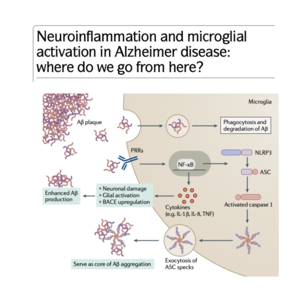
0This comprehensive review examines Alzheimer's disease (AD), focusing on the complex role of neuroinflammation, particularly microglial activation, in its progression. It critically assesses the prevailing amyloid cascade hypothesis, noting its limitations in fully explaining AD pathogenesis and highlighting the increasing evidence for inflammation's involvement. The text explores the dynamic interplay between microglia, astrocytes, and neurons and their contributions to the disease's hallmarks: amyloid-β plaques and tau tangles. Furthermore, the review discusses various in vivo evaluation methods for neuroinflammation, including CSF biomarkers and PET imaging, and proposes therapeutic strategies aimed at modulating microglial activity. Ultimately, it suggests a model where microglial responses shift from protective in early stages to detrimental in late AD, influenced by individual susceptibility and priming.
References:
- Leng F, Edison P. Neuroinflammation and microglial activation in Alzheimer disease: where do we go from here?[J]. Nature Reviews Neurology, 2021, 17(3): 157-172.
