
 0
0 0
0Title:
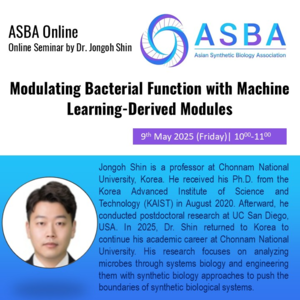
Modulating Bacterial Function with Machine Learning-Derived Modules
Astract:
Synthetic biology offers significant potential for the tailored reprogramming of cellular functions for a wide range of applications. However, strain engineering efforts often face challenges due to context-dependent gene regulation and the complex interactions between synthetic circuits and host physiology. In this study, we introduce a novel framework that utilizes iModulons—co-regulated gene sets identified through machine learning—as modular design elements. This strategy allows for the precise identification of essential genetic components, improving target selection and the predictability of circuit behavior across different contexts. Comparative analyses with traditional methods demonstrate that our approach significantly enhances efficiency and predictability. These results highlight the transformative potential of iModulon-based strategies for the systematic and reliable reprogramming of complex bacterial regulatory networks.
Personal Profile:
Jongoh Shin is a professor at Chonnam National University, Korea. He received his Ph.D. from the Korea Advanced Institute of Science and Technology (KAIST) in August 2020. Afterward, he conducted postdoctoral research at UC San Diego, USA. In 2025, Dr. Shin returned to Korea to continue his academic career at Chonnam National University. His research focuses on analyzing microbes through systems biology and engineering them with synthetic biology approaches to push the boundaries of synthetic biological systems.
