

 1220
1220 0
080 years after 1945, Japan finds its memories of WWII fading
- Japan faces a challenge as the numbers of living war veterans and atomic bomb survivors dwindle, raising concerns about preserving wartime memories.
- PM Ishiba expressed "remorse for the war," emphasising the need to learn from history and commit to peace, while Emperor Naruhito hoped such horrors would never be repeated.
- Despite its apologies, Japan's political shift to the right and seeming discomfort with its own history stir unease among neighbouring countries over its wartime atonement.
August 15, 2025, The Strait Times
🌟完整外刊原文,请加V: HLSHW666 进学习群免费获取
As Japan marks 80 years since its surrender in World War II on Aug 15, 1945, the country’s collective memory of its role in the global conflagration – and the catastrophic defeat it suffered – is fading fast.
The voices of living veterans, such as 95-year-old Hideo Shimizu, and atomic bomb survivors like 86-year-old Michiko Yagi, are fast disappearing.
How Japan will remember its imperial past and the war’s influence on the nation’s psyche is now becoming a pressing concern.
Ms Yagi, a hibakusha who experienced the devastation of her native Nagasaki on Aug 9, 1945, counts her family – her mother and four siblings – fortunate to have survived the blast, although they endured prolonged bouts of debilitating diarrhoea in its aftermath.
Hibakusha is the term used to refer to survivors of the atomic bombings of Hiroshima and Nagasaki.
“Historically, Japan certainly has made mistakes, and those mistakes are our burden to bear as wartime aggressors,” Ms Yagi told The Straits Times.
“It is our responsibility to remember, to convey our experiences, to fight for peace and to lobby for a world without nuclear weapons,” she said, expressing her deepest wish for Nagasaki to remain the last city on earth to suffer the horrors of an atomic bomb.
“The youngest hibakusha is now 80, and soon there will not be many of us left. Looking at the perilous state of the world today, I honestly feel really scared.”
Ms Yagi is one of just 99,130 remaining hibakusha, whose average age now stands at 86 years, according to official figures released on March 31. For the first time, their numbers have dipped below 100,000.
The atomic bomb was a weapon of unprecedented destructive power that obliterated the cities of Hiroshima and Nagasaki.
Then Emperor Hirohito, in a nationwide radio broadcast announcing Japan’s surrender at noon on Aug 15, 1945, starkly described it as “a new and most cruel bomb”, acknowledging that “the war situation has developed not necessarily to Japan’s advantage”.
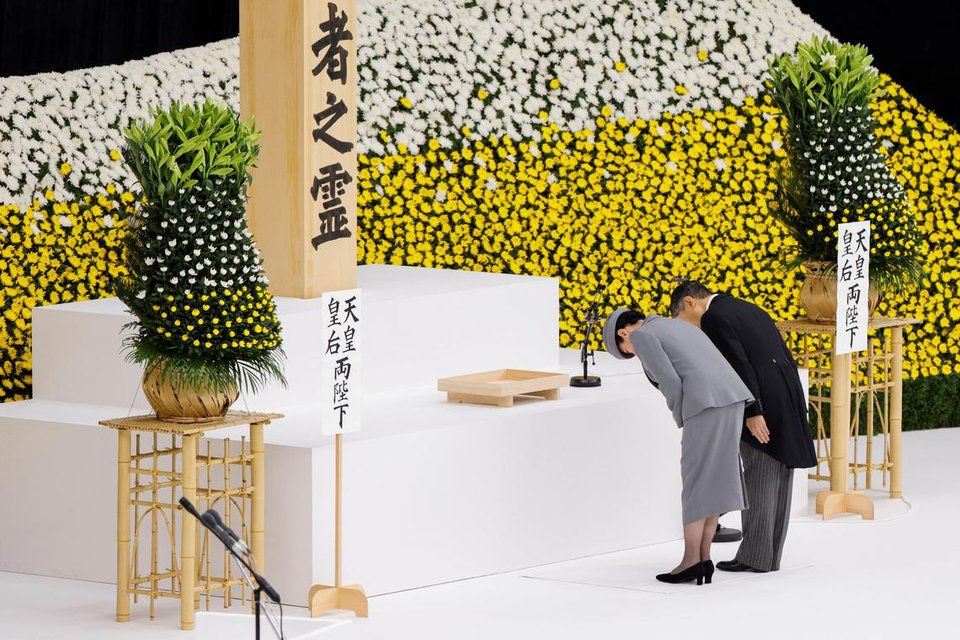
In the present day, a year-long series of war memorial events culminated in the Memorial Ceremony for the War Dead on Aug 15, although the surrender documents were formally signed only on Sept 2, 1945.
At the annual ceremony, where a minute’s silence was observed at 12pm, Prime Minister Shigeru Ishiba was the first leader in 13 years to express “remorse for the war” in his memorial speech.
“We must never repeat the horrors of war. We must never again err on the path we take,” Mr Ishiba said. “We must now deeply engrave in our hearts the remorse and lessons of that war.”
He added: “No matter how much time passes, we will continue to pass on the painful memories of war and our resolute pledge to never wage war again across generations and continue to take action towards lasting peace.”
