

 0
0 0
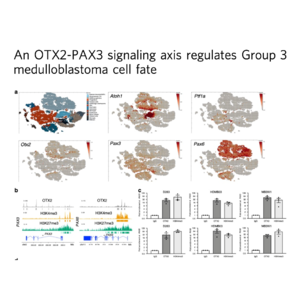
0This article investigates the molecular mechanisms driving Group 3 medulloblastoma (MB), the most aggressive subtype of this common pediatric brain tumor. The research centers on the OTX2 oncogene, demonstrating that it promotes tumor growth by repressing neural differentiation through a newly identified OTX2-PAX3 signaling axis. Using multiomic analyses, the study finds that OTX2 silencing derepresses neurodevelopmental transcription factors like PAX3 and PAX6, with only PAX3 overexpression significantly inhibiting tumorigenic properties and increasing survival in mouse models. Crucially, the OTX2-PAX3 circuit is shown to regulate cell fate through the mTORC1 signaling pathway, which is associated with an undifferentiated stem/progenitor cell state in Group 3 MB. The findings suggest that targeting mTORC1 signaling with dual inhibitors represents a viable therapeutic strategy for this highly aggressive cancer.
References:
- Zagozewski J, Shahriary G M, Morrison L C, et al. An OTX2-PAX3 signaling axis regulates Group 3 medulloblastoma cell fate[J]. Nature Communications, 2020, 11(1): 3627.
