

 0
0 0
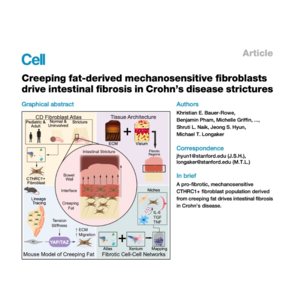
0This article discusses research into the mechanism of intestinal fibrosis, a major complication of Crohn's disease (CD), focusing on the role of creeping fat (CF), which is mesenteric adipose tissue wrapped around the diseased bowel. The authors identified a population of pro-fibrotic, mechanosensitive CTHRC1+ fibroblasts originating from this CF, which they found are enriched at the fibrotic interface between the fat and the bowel wall in strictures. Using single-cell analysis of human tissue and a specialized mouse model, the study demonstrates that these fibroblasts promote fibrosis through the YAP/TAZ signaling pathway. Critically, inhibiting this signaling in the CF-derived fibroblasts was shown to reduce intestinal fibrosis, suggesting that targeting CF could be a viable therapeutic strategy for CD strictures.
References:
- Bauer-Rowe, Khristian E., et al. "Creeping fat-derived mechanosensitive fibroblasts drive intestinal fibrosis in Crohn’s disease strictures." Cell (2025).
