
 5
5 0
0Title:
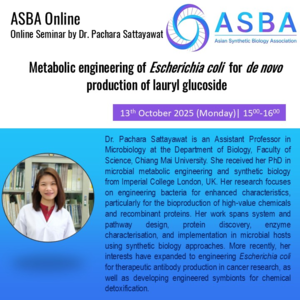
Metabolic engineering of Escherichia coli for de novo production of lauryl glucoside
Astract:
Lauryl glucoside is a biodegradable, non-ionic surfactant commonly used in cosmetics, yet its conventional chemical synthesis raises sustainability concerns. To address this, the researchers engineered Escherichia coli BL21(DE3) with a novel pathway for microbial lauryl glucoside production. They first optimised the biosynthesis of the precursor 1-dodecanol, then screened a panel of UDP-glycosyltransferases for their ability to convert it into lauryl glucoside. Among six candidates, MtH2 from Medicago truncatula demonstrated the highest activity, and its product formation was confirmed by HPLC and targeted LC-MS. Pathway analysis revealed that limited 1-dodecanol supply was the key bottleneck, and supplementation experiments substantially improved lauryl glucoside yields. Overall, this work establishes a proof of concept for sustainable microbial production of lauryl glucoside and provides new insight into pathway bottlenecks for future optimisation.
Personal Profile:
Dr. Pachara Sattayawat is an Assistant Professor in Microbiology at the Department of Biology, Faculty of Science, Chiang Mai University. She received her PhD in microbial metabolic engineering and synthetic biology from Imperial College London, UK. Her research focuses on engineering bacteria for enhanced characteristics, particularly for the bioproduction of high-value chemicals and recombinant proteins. Her work spans system and pathway design, protein discovery, enzyme characterisation, and implementation in microbial hosts using synthetic biology approaches. More recently, her interests have expanded to engineering Escherichia coli for therapeutic antibody production in cancer research, as well as developing engineered symbionts for chemical detoxification.
