

 5
5 0
0Title:
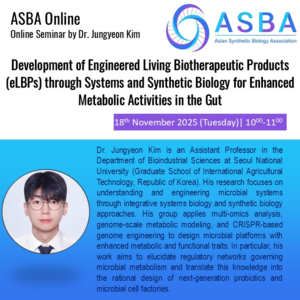
Development of Engineered Living Biotherapeutic Products (eLBPs) through Systems and Synthetic Biology for Enhanced Metabolic Activities in the Gut
Astract:
The convergence of systems biology and synthetic biology provides a powerful framework for the development of engineered living biotherapeutic products (eLBPs) with improved functionality and metabolic performance in the gut. This study presents a systems-level strategy for designing synthetic microbial therapeutics capable of sustaining high metabolic activities under intestinal conditions. Using Saccharomyces boulardii and Escherichia coli Nissle 1917 as chassis organisms, the researchers integrated multi-omics data with genome-scale metabolic modeling to identify and overcome key bottlenecks limiting microbial metabolism and recombinant protein secretion in the gut. Specifically, S. boulardii strains engineered to metabolize host-derived sugars such as L-fucose and lactose demonstrated enhanced metabolic activity through continuous carbon supply, while E. coli Nissle exhibited improved energy efficiency by eliminating trehalose metabolism–related constraints under anaerobic conditions. These findings establish a rational design framework for constructing eLBPs with enhanced intestinal metabolic activity, bridging computational modeling with synthetic biology to achieve robust and predictable function within complex gut ecosystems.
Personal Profile:
Dr. Jungyeon Kim is an Assistant Professor in the Department of Bioindustrial Sciences at Seoul National University (Graduate School of International Agricultural Technology, Republic of Korea). His research focuses on understanding and engineering microbial systems through integrative systems biology and synthetic biology approaches. His group applies multi-omics analysis, genome-scale metabolic modeling, and CRISPR-based genome engineering to design microbial platforms with enhanced metabolic and functional traits. In particular, his work aims to elucidate regulatory networks governing microbial metabolism and translate this knowledge into the rational design of next-generation probiotics and microbial cell factories.
