

 0
0 0
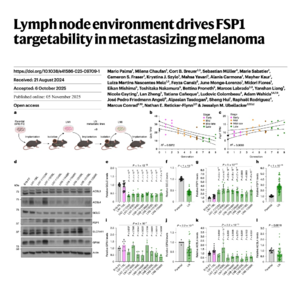
0The research examines the adaptations utilized by metastatic melanoma cells in the specialized lymph node microenvironment, revealing a vulnerability in their ferroptosis defense system. The hypoxic conditions found in the LNs trigger the breakdown of the primary anti-ferroptosis enzyme, glutathione peroxidase 4 (GPX4), via ubiquitin-proteasome degradation. This loss of GPX4 dependence forces the melanoma cells to switch reliance to an alternative protective protein, the ferroptosis suppressor protein 1 (FSP1), which is found accumulating at perinuclear lysosomes. Functionally, this shift results in LN cells exhibiting reduced levels of components necessary for glutathione synthesis, making them uniquely susceptible to disruption. Crucially, the inhibition of FSP1 effectively suppresses tumor growth in vivo only within the LNs, establishing this pathway as a context-dependent therapeutic target for combating metastasis.
References:
- Palma M, Chaufan M, Breuer C B, et al. Lymph node environment drives FSP1 targetability in metastasizing melanoma[J]. Nature, 2025: 1-10.
