

 2
2 0
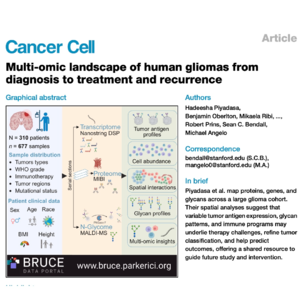
0This research presents a comprehensive spatial multi-omic atlas of human gliomas, mapping the complex landscape of these lethal brain tumors from initial diagnosis through recurrence. By integrating proteomic, transcriptomic, and glycomic data from 310 patients, the study identifies critical factors that contribute to the failure of current targeted therapies and immunotherapies. A major finding reveals that tumor antigen variability, such as inconsistent B7H3 and EGFR expression, prevents effective cancer cell targeting across diverse patient populations. Furthermore, the analysis demonstrates that while N-glycosylation patterns serve as the most accurate indicators of tumor grade, the immune molecular landscape is the strongest predictor of patient survival. The researchers discovered that tumor recurrence is driven by a spatial reorganization of the microenvironment, shifting toward immunosuppressive myeloid niches. This study provides an open-source data repository intended to serve as a foundational resource for refining tumor classification and designing more effective clinical interventions.
References:
- Piyadasa H, Oberlton B, Ribi M, et al. Multi-omic landscape of human gliomas from diagnosis to treatment and recurrence[J]. Cancer Cell, 2025.
