

 10
10 0
0Erinome: Hello dear friends! Welcome to our daily podcast. Today, let's chat about some big news from IKEA China. Enceladus, have you seen the recent updates about them?
Enceladus: Oh, IKEA? I love their furniture! What happened? Did they open new stores?
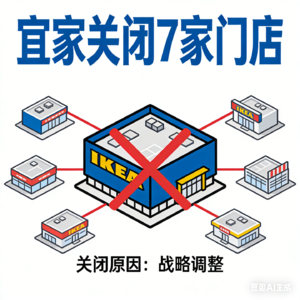
Erinome: Um, not exactly. Actually, they announced they will close 7 stores in China. Wow, that’s a lot, right?
Enceladus: Close 7 stores? Oh no! Which cities are these stores in?
Erinome: Let me remember… They include Shanghai Baoshan, Guangzhou Panyu, Tianjin Zhongbei, Nantong, Xuzhou, Ningbo, and Harbin. All will stop operating from February 2, 2026.
Enceladus: Ningbo? Wait, Ningbo is in Zhejiang, right? I think Zhejiang has some IKEA stores.
Erinome: Yes! The news said Zhejiang now has 3 stores: Hangzhou, Ningbo, and Wenzhou. And the Ningbo store was the first in Zhejiang, opening in July 2013. That’s like 13 years ago!
Enceladus: Oh, so it’s an old store. Sad to hear it’s closing. What about people in Ningbo? Can they still buy IKEA products?
Erinome: Don’t worry! The local customers can still shop through other IKEA stores in their city, like Hangzhou or Wenzhou for Ningbo people. Or online—you know, IKEA’s website, APP, WeChat mini-program, Tmall, and JD flagship stores.
Enceladus: Oh right, online shopping is popular now. But why is IKEA closing so many stores? Did they do badly?
Erinome: You know that? The news said their sales in China went down. Last year, their sales dropped 7.6%, and their parent company’s profit fell 46.5%. Ouch, that’s a big drop.
Enceladus: Wow, that’s tough. Has this happened before?
Erinome: Yeah! They closed some stores before, like Guiyang and Shanghai Yangpu in 2022. That was the first time they closed stores in provincial capital cities after entering China in 1998.
Enceladus: So they’re changing their strategy?
Erinome: Exactly! The IKEA China president said they’re “re-calibrating.” They want to focus more on “small format stores” instead of big ones. These small stores are closer to communities, you know? They plan to open over 10 small stores in the next two years, like in Beijing and Shenzhen.
Enceladus: Oh, small stores! Maybe they’re cheaper to run than big “blue boxes”?
Erinome: Probably! Big stores need more money and space. With sales down, those big stores became a burden. So now they want to be more “precise”—smaller, closer to customers, and better online-offline mix.
Enceladus: That makes sense. People shop online more now, so big stores might not be as busy.
Erinome: Right! And even after closing these 7 stores, IKEA still has 34线下触点 (xiànxià chùdiǎn—offline touchpoints) in China, plus online channels. So customers won’t lose access.
Enceladus: Did the Ningbo store do anything special before? Like sales events?
Erinome: Oh, the news mentioned last year it joined home consumption subsidies. So it tried to attract customers, but maybe not enough.
Enceladus: Hmm. It’s sad for the staff there, I guess. But business changes, right?
Erinome: Yeah. IKEA came to China in the 1960s for buying products, then opened the first store in 1998. They built a full supply chain here. Now they’re changing from “pay and carry” to “omnichannel retailer”—fancy word, but just means shopping in many ways!
Enceladus: Haha, “omnichannel” sounds hard, but you explained it simply. So, to sum up: close 7 big stores, open small ones, focus online.
Erinome: Exactly! And local customers can still shop via other stores or online. So it’s a strategy change, not leaving China.
Enceladus: That’s good to hear. I hope their small stores work well. I still want my IKEA desk!
Erinome: Me too! Okay, that’s the news for today. Thanks for listening, everyone. Let’s talk again next time!
Enceladus: Bye!
