

 16
16 0
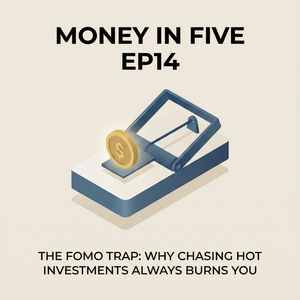
0📋 节目简介 (Description)Your coworker made 300% on cryptocurrency. Your friend got rich flipping houses. Everyone seems to be making money except you. So you jump in — right before the crash. This episode dissects FOMO investing, the emotional trap that turns ordinary people into bag holders. You'll learn why hot investments are hot precisely because you heard about them too late, understand the difference between investing and speculation, and discover why boring index funds outperform excitement over decades. This isn't about never taking risks — it's about recognizing when you're investing based on fear rather than fundamentals.
🎧 本集精华 (Key Takeaways):
- FOMO的本质 (The Nature of FOMO):理解为什么"错失恐惧症"会系统性地让你在高点买入——当一个投资热到你朋友都在谈论时,聪明钱早已离场。
- 投资vs投机 (Investing vs Speculation):掌握核心区别——投资是基于资产长期价值,投机是押注短期价格波动,混淆两者会让你在游戏中扮演输家角色。
- 信息不对称陷阱 (Information Asymmetry Trap):认识到当你从社交媒体或朋友处听说"暴富机会"时,你是信息链的最末端,专业玩家早已获利了结。
- 幸存者偏差 (Survivorship Bias):揭穿"我朋友赚了300%"的错觉——你没看到99个亏损的人,只看到1个赚钱的,这扭曲了真实成功率。
- 无聊的力量 (The Power of Boring):用数据证明过去50年里,无聊的指数基金跑赢了95%的主动选股和热门投资,稳定胜过刺激。
💡 核心词汇 (Vocabulary):
- FOMO (Fear of Missing Out): 错失恐惧症(因害怕错过机会而冲动投资的心理状态)。
- Bag Holder: 接盘侠(在高点买入、被套牢的投资者)。
- Hot Money: 热钱(追逐短期高回报、快速流动的投机资金)。
- Speculation vs Investment: 投机vs投资(基于价格波动的赌博 vs 基于内在价值的长期持有)。
- Survivorship Bias: 幸存者偏差(只看到成功案例、忽略失败案例的认知错误)。
- Information Asymmetry: 信息不对称(不同参与者掌握信息的质量和时间差异)。
- Greater Fool Theory: 博傻理论(买入高价资产期待有更傻的人接盘的投机逻辑)。
