

 2
 0
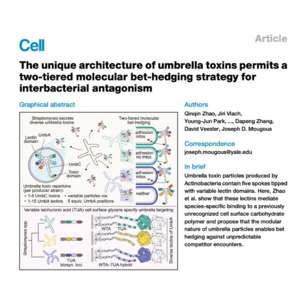
This research explores the specialized architecture and defensive utility of umbrella toxins, which are large protein complexes used by Streptomyces bacteria to inhibit competitors. The study reveals that these toxins employ a two-tiered molecular bet-hedging strategy to navigate the vast structural diversity of target cell surfaces. Utilizing cryo-electron microscopy, the authors show how the toxin scaffold interacts with teichuronic acid polymers to form helical filaments. Genomic analysis further demonstrates that these bacteria maintain an extensive repertoire of lectin domains to recognize varying carbohydrate signatures on rival microbes. This complex system allows the bacteria to effectively target multiple species while simultaneously evading viral predation through surface modification. Overall, the findings explain how specific protein-glycan interactions facilitate interbacterial antagonism and survival in diverse soil environments.
References:
- Zhao Q, Vlach J, Park Y J, et al. The unique architecture of umbrella toxins permits a two-tiered molecular bet-hedging strategy for interbacterial antagonism[J]. Cell, 2025.
