
 12
12 0
0Erinome: Hello dear friends! Welcome to our daily chat. I'm Erinome, and sitting next to me is Enceladus. Today, let's talk about a news story that happened as the year is ending. You know, many companies have year-end parties to thank employees for their hard work, right? But some employees might not want to perform on stage.
Enceladus: Oh right! I’ve heard that before. So what’s the story here?
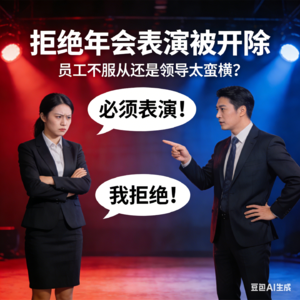
Erinome: Well, there’s a case from Shenzhen Labor Union. A company leader asked an employee named Xiao Ming to perform a talk show at the year-end party. Xiao Ming refused, saying he was busy with work. The leader thought he “didn’t give face”.
Enceladus: “Didn’t give face”? Wow, that sounds serious. What happened next?
Erinome: The next day, the company gave Xiao Ming a “Termination Notice”. They said he didn’t follow company安排 (ān pái) and was absent from work, which was a serious violation.
Enceladus: Oh no! But wait, did Xiao Ming say he wouldn’t go to the party?
Erinome: No! He only said he didn’t want to perform. And even if he refused to go, it should be okay. Because the leader had said before that the party was “non-mandatory attendance”.
Enceladus: So he was busy working, trying to help the company, but got fired instead? That’s sad. Why?
Erinome: The answer is in the leader’s “didn’t give face”. The leader thought employees should “give face” to leaders. Like, when the leader called Xiao Ming’s name in front of everyone, Xiao Ming should agree, be热情 (rè qíng), maybe even say thanks for the chance. But Xiao Ming said he was busy, and the leader thought that was just an excuse—“not obeying”.
Enceladus: Hmm, the leader was upset because he didn’t get the answer he wanted. But firing someone directly? That’s too harsh.
Erinome: Exactly! It’s not just about the leader’s small heart. It shows the leader thinks he has absolute power. If employees don’t do what he wants, he can just say “not obeying” and fire them. For other employees, it’s like “killing a chicken to warn the monkeys”—if you want to stay, you have to do even the “non-mandatory” things.
Enceladus: That’s why many employees hate year-end parties, right? Because some leaders make it a “test of obedience” instead of a fun get-together.
Erinome: You got it! Year-end parties should be for colleagues to relax and get closer. But with such leaders, it becomes a show—employees have to表演 (biǎo yǎn) their love for the company, admiration for leaders, and happiness about the party. Even if the performance is good, employees feel no respect or belonging. The more热闹 (rè nao) the party, the more they hate it. How can a company go far with a broken team spirit?
Enceladus: But leaders can’t be above the law, right?
Erinome: Exactly! The court said the company illegally terminated the contract. They have to pay Xiao Ming compensation. The ruling shows companies can’t use power too much—their right to manage employees has limits. Having a year-end party or performances isn’t a must. If a company respects, understands, and包容 employees, it can win hearts even without a party.
Enceladus: That’s a good lesson. Respect is more important than any party.
Erinome: Yep! Okay, that's it for today. Let's talk again next time. Bye!
Enceladus: Bye everyone!
