

 0
0 0
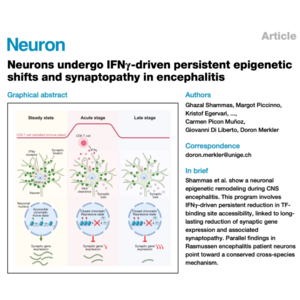
0Research published in 2026 identifies how viral encephalitis leads to permanent brain dysfunction through long-lasting epigenetic changes in neurons. Using a "viral déjà vu" mouse model, scientists discovered that even after an infection is cleared, interferon-gamma (IFNγ) signaling triggers a persistent closing of chromatin at sites responsible for synaptic function. This process causes a durable reduction in synaptic density and altered neuronal excitability, which explains why patients often suffer from chronic seizures and cognitive decline. The study demonstrates that these structural and functional alterations occur even without widespread cell death, driven instead by a shift in the neurons' intrinsic genetic programs. Findings from human samples of Rasmussen’s encephalitis further validated this signature, highlighting a shared pathological mechanism across species. Ultimately, the research suggests that targeting chromatin remodeling pathways could offer new therapeutic strategies for treating chronic neuroinflammatory diseases.
References:
- Shammas G, Piccinno M, Egervari K, et al. Neurons undergo IFNγ-driven persistent epigenetic shifts and synaptopathy in encephalitis[J]. Neuron, 2025.
