

 0
0 0
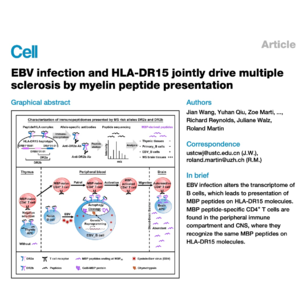
0This research study investigates how the Epstein-Barr virus (EBV) and the HLA-DR15 genetic haplotype work together to trigger multiple sclerosis (MS). The authors demonstrate that EBV infection fundamentally reprograms B cells, causing them to present specific myelin basic protein (MBP) peptides that are typically hidden from the immune system. These viral-induced changes lead to the activation of proinflammatory CD4+ T cells, which then attack the central nervous system. Notably, these specific autoantigens are absent in the thymus, meaning the body fails to develop natural tolerance to them during immune system maturation. By identifying these unique MBP fragments in both infected cells and MS brain tissue, the study provides a mechanistic link between viral triggers and autoimmune destruction. This discovery suggests that EBV-driven transcriptome alterations allow the virus to act as a permanent catalyst for the chronic immune response seen in MS patients.
References:
- Wang J, Qiu Y, Marti Z, et al. EBV infection and HLA-DR15 jointly drive multiple sclerosis by myelin peptide presentation[J]. Cell, 2026.
