

 1
1 0
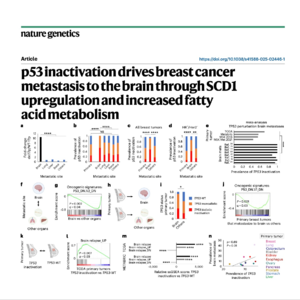
0This research explores how the inactivation of the p53 tumor-suppressor gene significantly increases the likelihood of breast cancer spreading to the brain. While mutations and chromosomal losses in p53 are common in many cancers, this study identifies a specific link to brain metastasis through the reprogramming of fatty acid metabolism. Scientists discovered that p53-deficient cells thrive in the brain by upregulating the SCD1 enzyme via the DEPDC1/SREBP1 pathway, allowing them to exploit lipids provided by astrocytes. Because these cancer cells become highly dependent on this metabolic shift, they are particularly vulnerable to FAS inhibitors, which successfully slowed tumor growth in experimental models. These findings suggest that screening for p53 alterations in primary tumors could better predict metastatic risk and help identify patients who might benefit from lipid-targeting therapies.
References:
- Laue K, Pozzi S, Zerbib J, et al. p53 inactivation drives breast cancer metastasis to the brain through SCD1 upregulation and increased fatty acid metabolism[J]. Nature Genetics, 2025: 1-16.
