

 1
1 0
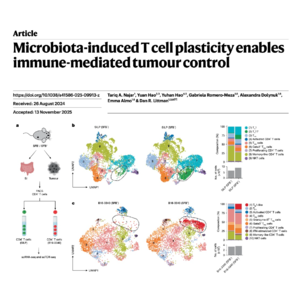
0This research explores how specific gut bacteria influence the effectiveness of cancer immunotherapy through a process called antigenic mimicry. Scientists found that Segmented Filamentous Bacteria (SFB) can prime immune cells in the intestine that later travel to distant tumors sharing similar protein markers. Once inside the tumor, these cells transform into pro-inflammatory helpers that activate a robust attack by cytotoxic T cells, significantly slowing cancer growth. In contrast, other microbes like Helicobacter hepaticus fail to trigger this response because the immune cells they produce maintain a suppressive role even after migrating to the tumor site. The study concludes that the gut microbiome can be strategically leveraged to enhance anti-PD-1 treatments and improve clinical outcomes.
References:
- Najar T A, Hao Y, Hao Y, et al. Microbiota-induced T cell plasticity enables immune-mediated tumour control[J]. Nature, 2026: 1-10.
