

 0
0 0
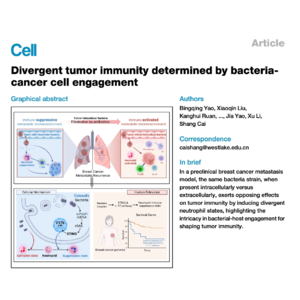
0This research explores how intracellular bacteria residing within breast cancer cells drive metastatic recurrence by manipulating the host's immune system. The study identifies that when bacteria like Staphylococcus xylosus invade tumor cells, they activate the cGAS-STING signaling pathway, which subsequently triggers the expression of IL-17B. This molecular shift recruits and reprograms neutrophils into an immunosuppressive state, allowing cancer cells to evade immune surveillance and colonize distant organs like the lungs. In contrast, extracellular bacteria were found to promote an anti-tumor environment by enhancing the antigen-presenting capabilities of immune cells. Experimental evidence shows that eliminating these internal microbes with antibiotics or depleting neutrophils significantly reduces the rate of cancer relapse after surgery. Finally, the authors correlate these findings with human clinical data, suggesting that the bacterial invasion signature is a strong predictor of poor prognosis in breast cancer patients.
References:
- Yao B, Liu X, Ruan K, et al. Divergent tumor immunity determined by bacteria-cancer cell engagement[J]. Cell, 2026.
