

 0
 0
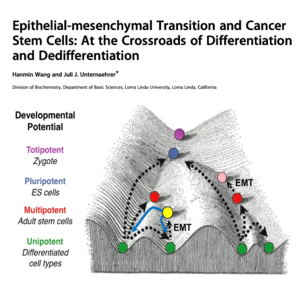
This review examines the complex relationship between epithelial-mesenchymal transition (EMT) and the differentiation status of cells in both development and cancer. While EMT is traditionally viewed as a differentiation step in embryos, the authors argue it actually induces a transient dedifferentiation that allows cells to adopt new identities. In a pathological context, this process enables cancer cells to acquire stem-like properties, leading to increased self-renewal, drug resistance, and metastatic potential. The researchers suggest that EMT transcription factors, such as Snail and Twist, facilitate this shift by repressing specific microRNAs that normally maintain a specialized cell state. Ultimately, the source proposes that EMT functions as a reprogramming mechanism that creates a "window of opportunity" for cells to transition between different functional stages. This conceptual framework helps reconcile why the same biological process can lead to both ordered tissue growth and malignant tumor progression.
References:
- Wang H, Unternaehrer J J. Epithelial‐mesenchymal transition and cancer stem cells: At the crossroads of differentiation and dedifferentiation[J]. Developmental Dynamics, 2019, 248(1): 10-20.
