

 0
0 0
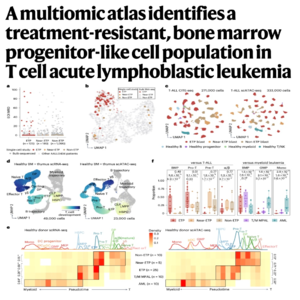
0This research article utilizes single-cell multiomic analysis to identify a specific subset of cancer cells responsible for treatment failure in T cell acute lymphoblastic leukemia (T-ALL). By mapping over 600,000 cells against a healthy pediatric developmental atlas, scientists discovered a bone marrow progenitor-like (BMP-like) population that is highly resistant to standard chemotherapy and steroids. The presence of these primitive, stem-like cells serves as a powerful prognostic biomarker, accurately predicting poor survival across various leukemia subtypes regardless of traditional risk factors. Genetic analysis further revealed that NOTCH1 mutations help push cancer cells away from this resistant state, while specific fusions drive the aggressive BMP-like phenotype. Ultimately, the study suggests that identifying these high-risk signatures early can guide doctors toward targeted therapies, such as the drug venetoclax, to improve patient outcomes.
References:
- Xu J, Chen C, Sussman J H, et al. A multiomic atlas identifies a treatment-resistant, bone marrow progenitor-like cell population in T cell acute lymphoblastic leukemia[J]. Nature cancer, 2025, 6(1): 102-122.
