

 0
0 0
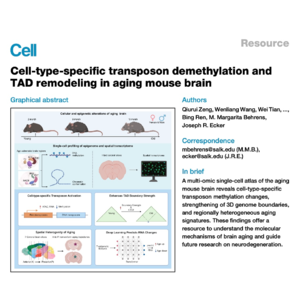
0This study presents a comprehensive single-cell multi-omic atlas of the aging mouse brain across eight distinct regions. By integrating DNA methylation, chromatin conformation, and spatial transcriptomics, the researchers identified 36 major cell types and their specific aging signatures. A key discovery involves the demethylation of transposable elements, which serves as a precise molecular marker for aging and suggests the reactivation of ancient viral sequences. The study also highlights structural remodeling of the 3D genome, specifically the strengthening of topologically associated domain (TAD) boundaries as mice grow older. Furthermore, the authors utilized deep-learning models to successfully predict age-related changes in gene expression based on these epigenetic features. Ultimately, this atlas provides a vital framework for understanding the molecular mechanisms of neurodegeneration and cellular decline over time.
References:
- Zeng Q, Wang W, Tian W, et al. Cell-type-specific transposon demethylation and TAD remodeling in aging mouse brain[J]. Cell, 2026.
