

 2
2 0
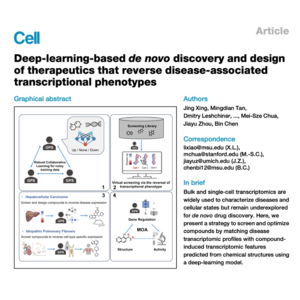
0Researchers have developed a deep-learning platform called GPS to accelerate de novo drug discovery by analyzing chemical structures to predict how they change gene expression. While traditional methods focus on specific protein targets, this system identifies molecules capable of reversing disease-associated transcriptional phenotypes to restore healthy cellular states. The study demonstrates the platform's efficacy by identifying and optimizing novel therapeutic candidates for hepatocellular carcinoma and idiopathic pulmonary fibrosis. By utilizing structure-gene-activity relationships, the model successfully screens vast compound libraries and clarifies complex drug mechanisms. This computational strategy bridges the gap between transcriptomic profiling and the design of potent, selective new medicines.
References:
- Xing J, Tan M, Leshchiner D, et al. Deep-learning-based de novo discovery and design of therapeutics that reverse disease-associated transcriptional phenotypes[J]. Cell, 2026.
