

 3
3 0
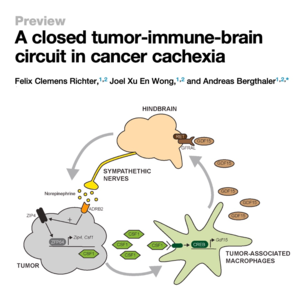
0This source explores a newly discovered biological circuit involving the tumor, immune system, and brain that drives cancer cachexia, a severe wasting syndrome. Research reveals that pancreatic cancer cells use norepinephrine signaling to recruit macrophages, which then release a protein called GDF15. This protein acts on the hindbrain to trigger a catabolic state, resulting in significant muscle and fat loss alongside reduced appetite. The text emphasizes that cachexia is not just a localized issue but a systemic breakdown of organ communication involving zinc metabolism and nerve activity. Understanding these interconnected pathways offers a foundation for developing targeted therapies that could stabilize a patient’s weight and improve survival. Future clinical success may depend on multi-pronged strategies that disrupt this self-perpetuating cycle of tissue degradation.
References:
- Richter F C, Wong J X E, Bergthaler A. A closed tumor-immune-brain circuit in cancer cachexia[J]. Cancer Cell, 2026.
