

 0
0 0
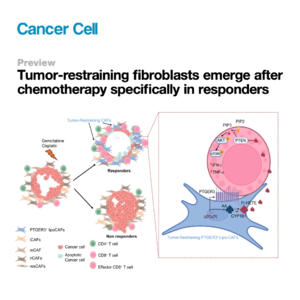
0Recent research has identified a unique subpopulation of cancer-associated fibroblasts (CAFs), known as lipoCAFs, that emerge in bladder cancer patients who respond well to chemotherapy. These specialized cells undergo lipid oxidation reprogramming to produce a signaling molecule called 11-HETE, which effectively boosts the body's immune response against tumors. By inhibiting a specific protein within CD8+ T cells, these fibroblasts enhance the ability of immune cells to attack and destroy cancer. This discovery highlights the functional heterogeneity of the tumor microenvironment, distinguishing between fibroblasts that promote cancer and those that help restrain its growth. Understanding these tumor-restraining pathways offers a promising new strategy for improving the effectiveness of traditional treatments. Ultimately, selectively targeting or encouraging the development of these beneficial fibroblasts could lead to more successful clinical outcomes for cancer patients.
References:
- Mahadevan K K, Kalluri R. Tumor-restraining fibroblasts emerge after chemotherapy specifically in responders[J]. Cancer Cell, 2026.
