

 0
0 0
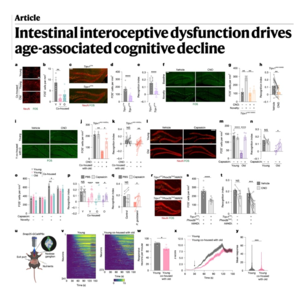
0This research identifies a specific gut-brain pathway that accelerates age-related cognitive decline through the disruption of internal sensory signaling. Scientists discovered that the accumulation of the bacterium Parabacteroides goldsteinii in older mice triggers peripheral inflammation, which subsequently impairs the function of vagal sensory neurons. This interoceptive dysfunction prevents the brain from receiving necessary signals, leading to diminished hippocampal activity and significant memory loss. The study demonstrates that these cognitive deficits can be transmitted to young mice via microbiome transfer but are reversible through antibiotic treatment or the stimulation of sensory pathways. By targeting the GPR84 signaling pathway or using interoceptomimetics to restore gut-brain communication, the researchers successfully enhanced memory function in aged subjects. Ultimately, the findings suggest that preserving the integrity of intestinal signaling is a promising strategy for counteracting the mental effects of aging.
References:
- Cox T O, Devason A S, de Araujo A, et al. Intestinal interoceptive dysfunction drives age-associated cognitive decline[J]. Nature, 2026: 1-9.
