

 0
0 0
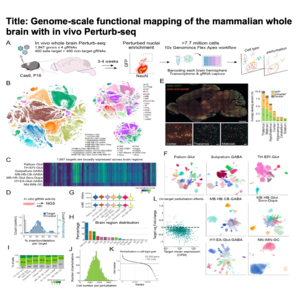
0This study introduces a comprehensive functional atlas of the mammalian brain by utilizing an enhanced in vivo Perturb-seq platform to map the effects of 1,947 disease-associated genes. By profiling over 7.7 million individual cells across the mouse brain, researchers identified how genetic loss-of-function impacts specific neuronal populations and transcriptional programs. The findings highlight that genetic essentiality is highly context-dependent, with certain mutations causing cell-type-specific depletion while others drive broad responses. Notably, the research reveals that closely related genes, such as the NMDA receptor subunits Grin2a and Grin2b, can trigger opposing molecular signatures despite their structural similarities. This massive dataset establishes a modular landscape of gene-to-cell-type relationships, offering a scalable framework for understanding the mechanisms behind neurodevelopmental and psychiatric disorders. Overall, the atlas provides a critical resource for identifying convergent therapeutic targets within complex neural circuits.
References:
- Shi T, Korshunova M, Kim S, et al. Genome-scale functional mapping of the mammalian whole brain with in vivo Perturb-seq[J]. bioRxiv, 2026: 2026.03. 16.711480.
