

 0
0 0
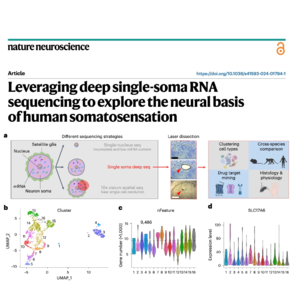
0This study introduces a comprehensive transcriptomic atlas of human dorsal root ganglion (hDRG) neurons, which are essential for processing sensory information like touch, temperature, and pain. By utilizing laser capture microdissection and deep RNA sequencing on individual cell bodies, researchers successfully identified sixteen distinct neuronal types. The findings highlight significant evolutionary differences between human sensory cells and those of rodents, explaining why many pain treatments fail to translate from animal models to clinical practice. Through spatial transcriptomics and microneurography, the authors mapped these molecular profiles to specific physiological functions, such as heat and chemical sensitivity. Ultimately, this research provides a high-resolution foundation for discovering new drug targets to treat chronic pain and other sensory disorders in humans.
References:
- Yu H, Nagi S S, Usoskin D, et al. Leveraging deep single-soma RNA sequencing to explore the neural basis of human somatosensation[J]. Nature neuroscience, 2024, 27(12): 2326-2340.
