
 0
0 0
0Title:
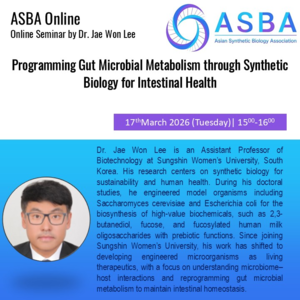
Programming Gut Microbial Metabolism through Synthetic Biology for Intestinal Health
Astract:
The human gut microbiota constitutes a complex ecosystem critical for host homeostasis, and its disruption is associated with various intestinal diseases. A key area of Dr. Lee’s research is microbial bile acid metabolism: primary bile acids assist in fat digestion, while gut microbes transform a portion into secondary bile acids that can drive intestinal inflammation, epithelial damage, and colorectal tumorigenesis. This presentation will highlight how synthetic biology strategies can be used to reprogram gut microbial metabolism, attenuate tumor-promoting signals, and restore intestinal balance. By uncovering mechanistic principles of microbiome–host interactions and engineering targeted microbial therapeutics, his work provides new approaches for preventing and treating intestine-related disorders driven by dysregulated bile acid metabolism.
Personal Profile:
Dr. Jae Won Lee is an Assistant Professor of Biotechnology at Sungshin Women’s University, South Korea. His research centers on synthetic biology for sustainability and human health. During his doctoral studies, he engineered model organisms including Saccharomyces cerevisiae and Escherichia coli for the biosynthesis of high-value biochemicals, such as 2,3-butanediol, fucose, and fucosylated human milk oligosaccharides with prebiotic functions. Since joining Sungshin Women’s University, his work has shifted to developing engineered microorganisms as living therapeutics, with a focus on understanding microbiome–host interactions and reprogramming gut microbial metabolism to maintain intestinal homeostasis.
