

 0
0 0
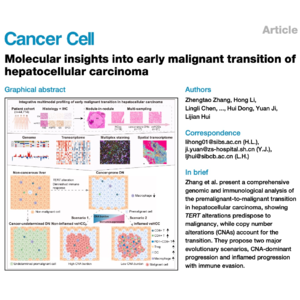
0This study provides a comprehensive genomic and immunological analysis of the transition from premalignant dysplastic nodules to very early hepatocellular carcinoma (veHCC). Researchers discovered that while TERT alterations often exist in early lesions, the actual shift to malignancy is primarily driven by the accumulation of copy number alterations (CNAs) rather than single-nucleotide mutations. Interestingly, premalignant nodules typically exist in an immune-desert state, appearing inactive despite the surrounding diseased liver tissue. As cancer emerges, the study identifies two distinct evolutionary paths: one defined by high chromosomal instability and another characterized by early immune activation and immediate evasion. These insights into the molecular landscape of early liver cancer suggest that immunotherapy could be a viable strategy for very early medical intervention. Detailed spatial transcriptomics further reveal how emerging tumors establish complex immunosuppressive environments to bypass the body's natural defenses.
References:
- Zhang Z, Li H, Chen L, et al. Molecular insights into early malignant transition of hepatocellular carcinoma[J]. Cancer Cell, 2025.
