

 0
0 0
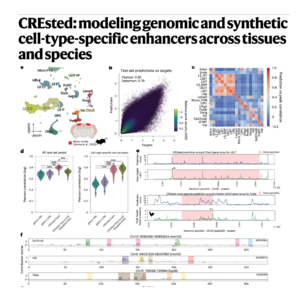
0The paper introduces CREsted, a new Python-based software package designed to model and design cell-type-specific enhancers using deep learning. By processing data from single-cell chromatin accessibility assays, the tool deciphers the complex "enhancer code" that dictates how specific genetic sequences drive cellular identity. The researchers demonstrate its versatility by accurately predicting regulatory activity across diverse species, including humans, mice, and zebrafish, and across various tissues and cancer states. CREsted stands out by offering a comprehensive pipeline that moves from raw data to nucleotide-level interpretations and the creation of synthetic enhancers. Ultimately, the framework enables scientists to identify critical transcription factor binding sites and validate genetic regulatory logic both in silico and in vivo.
References:
- Kempynck N, De Winter S, Blaauw C H, et al. CREsted: modeling genomic and synthetic cell type-specific enhancers across tissues and species[J]. BioRxiv, 2025: 2025.04. 02.646812.
