

 0
0 0
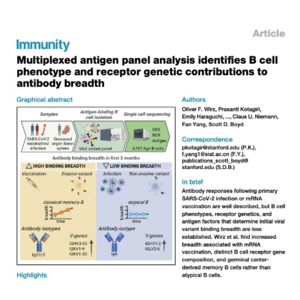
0This research study examines the cellular and genetic factors that determine how broadly human antibodies can recognize different SARS-CoV-2 variants. By analyzing thousands of individual B cells from both vaccinated and previously infected individuals, the authors found that mRNA vaccination typically produces a more versatile immune response than natural infection. The data reveals that post-germinal center memory B cells, rather than atypical B cells, are the primary drivers of increased antibody breadth over time. Furthermore, the study identifies specific B cell receptor genes and isotype expressions that correlate with a superior ability to bind to diverse viral mutations. These findings offer critical insights into the molecular mechanisms of immunity, providing a framework for developing more effective vaccines against rapidly evolving pathogens.
References:
- Wirz O F, Kotagiri P, Haraguchi E, et al. Multiplexed antigen panel analysis identifies B cell phenotype and receptor genetic contributions to antibody breadth[J]. Immunity, 2026.
