

 0
0 0
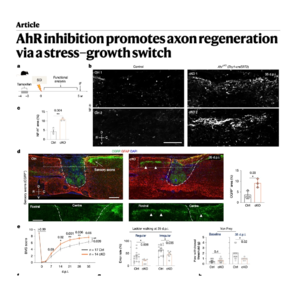
0This research identifies the aryl hydrocarbon receptor (AhR) as a critical molecular "brake" that limits the ability of the central nervous system to repair itself after injury. While neurons naturally activate AhR to manage cellular stress and maintain tissue integrity, this response inadvertently suppresses the metabolic and genetic programs required for axon regeneration. The study demonstrates that either genetic deletion or pharmacological inhibition of this receptor effectively flips a "stress-growth switch," redirecting neuronal resources toward protein synthesis and rapid regrowth. Experimental results in spinal cord and peripheral nerve injury models show that blocking AhR significantly improves both anatomical nerve repair and functional recovery. Furthermore, the findings reveal a complex interplay where AhR competes with other factors like HIF1α to coordinate the balance between survival and repair. Ultimately, the authors suggest that targeting the AhR pathway offers a promising new therapeutic strategy for treating neural damage.
References:
- Halawani D, Wang Y, Li J, et al. AhR inhibition promotes axon regeneration via a stress–growth switch[J]. Nature, 2026: 1-11.
