

 0
0 0
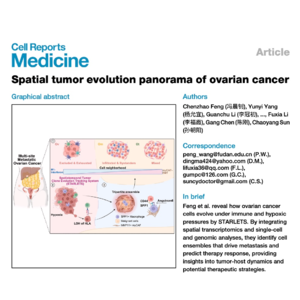
0This research outlines a comprehensive spatial tumor evolution panorama of high-grade serous ovarian cancer using the innovative STARLETS framework. By integrating whole-genome sequencing, single-cell RNA-seq, and spatial transcriptomics, the authors illustrate how hypoxia and immune pressure drive a Darwinian selection of malignant clones that eventually metastasize. The study identifies a unique tripartite ensemble consisting of SPP1+ macrophages, MMP11+ myCAFs, and epithelial cells that facilitate cancer spread within the peritoneal cavity and ascites. Experimental evidence shows that inhibiting the SPP1-CD44 axis can disaggregate these metastatic units and reduce tumor burden in vivo. Furthermore, the presence of SPP1+ macrophages serves as a vital biomarker for predicting patient responses to oncolytic virus and PARP inhibitor therapies. These findings offer deep insights into site-specific tumor-host dynamics and present new opportunities for targeted therapeutic intervention.
References:
- Feng C, Yang Y, Li G, et al. Spatial tumor evolution panorama of ovarian cancer[J]. Cell Reports Medicine, 2026, 7(3).
