

 0
0 0
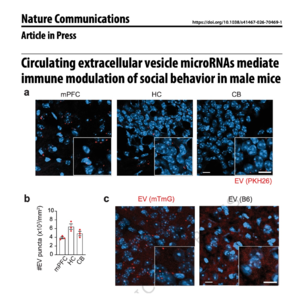
0The research explores how extracellular vesicles (EVs) and their microRNA cargo serve as a critical communication bridge between the immune system and the brain to regulate social behavior. Scientists discovered that transferring blood-borne EVs from healthy mice into models with social deficits, such as immunodeficient Rag1-/- mice, successfully restored normal sociability levels. These EVs travel through the bloodstream, enter the brain, and target neurons in the prefrontal cortex, where they deliver specific miRNAs like miR-23a-3p. This molecular delivery system improves inhibitory synaptic signaling by regulating the protein PKCε, which in turn stabilizes GABAA receptors to normalize brain activity. Ultimately, the study identifies T cells as the primary source of these pro-social vesicles, suggesting that EV-based therapies could offer a non-canonical pathway for treating neurodevelopmental and psychiatric conditions involving social impairment.
References:
- Matoba K, Dohi E, Garcia P A, et al. Circulating extracellular vesicle microRNAs mediate immune modulation of social behavior in male mice[J]. Nature Communications, 2026.
