

 1
1 0
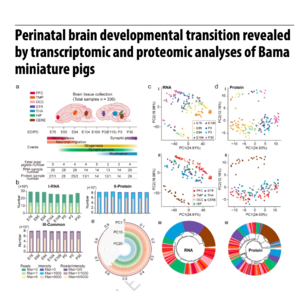
0This research established a comprehensive multi-omics atlas of the perinatal brain using Bama miniature pigs to bridge critical gaps in human neurodevelopmental knowledge. By analyzing transcriptomes and proteomes across various brain regions and time points, the study identified a pivotal developmental transition occurring between embryonic days 94 and 104. The authors demonstrated that pigs serve as a superior large-animal model compared to rodents, mirroring primate-specific processes like gliogenesis and synaptic refinement. Their findings revealed a "rise-and-fall" pattern of regional heterogeneity and synchronized molecular surges essential for functional brain maturation. Furthermore, the study integrated disease-risk genes, showing that perinatal pig brain organization transitions toward an adult-like state relevant to neurodevelopmental disorders. Ultimately, this resource provides a translational framework for decoding the molecular mechanisms of the birth transition and the origins of pediatric brain pathologies.
References:
- Wang Z, Chu F, Wang X, et al. Perinatal brain developmental transition revealed by transcriptomic and proteomic analyses of Bama miniature pigs[J]. Nature Communications, 2026.
