

 0
0 0
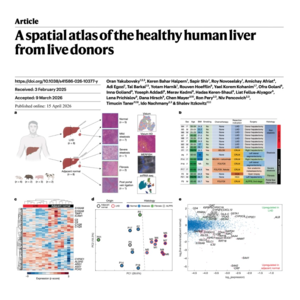
0This study introduces a spatial gene expression atlas of the healthy human liver by analyzing samples from live donors. Unlike previous references derived from deceased or diseased tissues, this research uses spatial transcriptomics to define the natural zonation of liver functions along the porto–central axis. The authors discovered that humans exhibit a pericentral shift in key metabolic activities, such as gluconeogenesis and the urea cycle, which differs significantly from mouse models and other mammals. Additionally, the study identifies specific transcriptional changes in early-stage steatosis, particularly regarding mitochondrial protein decline during lipid accumulation. This atlas serves as a high-resolution resource for understanding human hepatic biology and the cellular landscape of the liver in both health and disease.
References:
- Yakubovsky O, Bahar Halpern K, Shir S, et al. A spatial atlas of the healthy human liver from live donors[J]. Nature, 2026: 1-10.
