
 6
6 0
0Title:
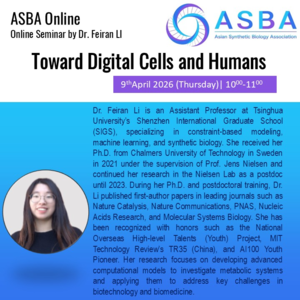
Toward Digital Cells and Humans
Astract:
Mechanistic metabolic models provide a structured framework for linking genotype to phenotype through cellular metabolism. Researchers developed genome-scale models for S. cerevisiae (e.g., Yeast8) and extended them to include additional biological processes and constraints, enabling quantitative simulation of metabolic states. To enhance model scope and predictive accuracy, they integrated deep learning methods (e.g., DLKcat for enzyme kinetics prediction). These advances improve phenotype prediction and support synthetic biology applications. At the whole-body level, they constructed Human2—a dynamic, multi-organ metabolic model capable of simulating inter-organ metabolism and dietary responses across over 18,000 food components. Collectively, these efforts establish a unified, scalable framework bridging cellular mechanisms and systemic human physiology, laying the groundwork for digital cells and digital human twins in systems biology and precision medicine.
Personal Profile:
Dr. Feiran Li is an Assistant Professor at Tsinghua University’s Shenzhen International Graduate School (SIGS), specializing in constraint-based modeling, machine learning, and synthetic biology. She received her Ph.D. from Chalmers University of Technology in Sweden in 2021 under the supervision of Prof. Jens Nielsen and continued her research in the Nielsen Lab as a postdoc until 2023. During her Ph.D. and postdoctoral training, Dr. Li published first-author papers in leading journals such as Nature Catalysis, Nature Communications, PNAS, Nucleic Acids Research, and Molecular Systems Biology. She has been recognized with honors such as the National Overseas High-level Talents (Youth) Project, MIT Technology Review’s TR35 (China), and AI100 Youth Pioneer. Her research focuses on developing advanced computational models to investigate metabolic systems and applying them to address key challenges in biotechnology and biomedicine.
