

 0
0 0
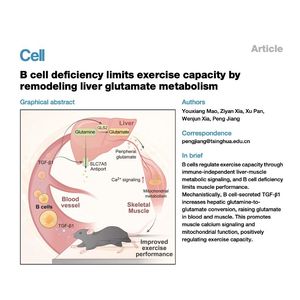
0This research reveals a previously unknown, immune-independent role for B cells in regulating physical exercise performance. According to the study, B cells release TGF-β1, a signaling protein that instructs the liver to increase its production and transport of glutamate. This hepatic glutamate then travels through the bloodstream to the skeletal muscles, where it triggers calcium signaling and supports mitochondrial health. When B cells are absent or depleted, this metabolic pathway is disrupted, leading to impaired muscle function and reduced endurance. Conversely, providing glutamate supplements can restore exercise capacity even in the absence of B cells. This discovery establishes a vital liver-muscle metabolic link that is maintained by the immune system.
References:
Mao Y, Xia Z, Pan X, et al. B cell deficiency limits exercise capacity by remodeling liver glutamate metabolism[J]. Cell, 2026.
