

 0
0 0
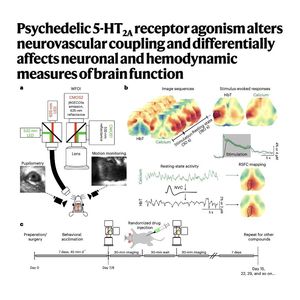
0This research explores how psychedelic substances like psilocybin decouple the relationship between neuronal activity and blood flow in the brain. Using both human neuroimaging and advanced optical imaging in mice, the authors discovered that these drugs disrupt neurovascular coupling, causing hemodynamic signals, the foundation of fMRI data, to become unreliable indicators of actual brain activity. These findings suggest that current interpretations of functional connectivity changes induced by psychedelics may be skewed by these unique vascular effects. Consequently, the researchers advise caution when using blood-based measurements to map the neural mechanisms of the psychedelic experience or its therapeutic benefits.
References:
Padawer-Curry J A, Krentzman O J, Kuo C C, et al. Psychedelic 5-HT2A receptor agonism alters neurovascular coupling and differentially affects neuronal and hemodynamic measures of brain function[J]. Nature neuroscience, 2025: 1-14.
