

 0
0 0
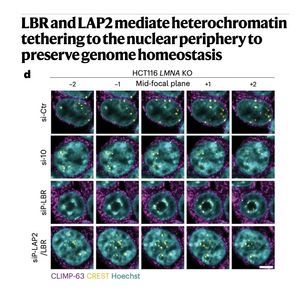
0This research identifies Lamin B receptor (LBR) and lamina-associated polypeptide 2 (LAP2) as the primary molecular tethers responsible for anchoring heterochromatin to the nuclear periphery in mammalian cells. By systematically depleting various nuclear envelope proteins, the authors discovered that losing these specific anchors causes dense genetic material to detach from the edge and relocate into the nuclear interior. This structural shift disrupts three-dimensional genome organization, reduces repressive epigenetic marks, and triggers widespread changes in gene expression. The study highlights that maintaining this peripheral attachment is vital for genome homeostasis, as its failure leads to innate immune activation and impaired cell development. Notably, the membrane-bound versions of LAP2 specifically cooperate with LBR and lamins to ensure proper chromatin positioning and cellular stability.
References:
Lewis R, Sinigiani V, Maziak N, et al. LBR and LAP2 mediate heterochromatin tethering to the nuclear periphery to preserve genome homeostasis[J]. Nature Cell Biology, 2026: 1-17.
