

 0
0 0
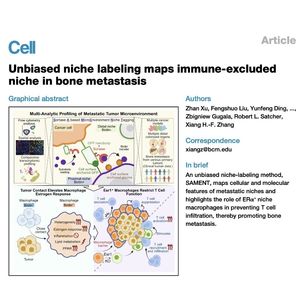
0The research article introduces SAMENT, a sophisticated tool designed to map the microenvironment niches surrounding metastatic cancer cells with high precision. By using a bacterial enzyme to tag neighboring cells, this method identifies specific cellular and molecular interactions that occur during the spread of cancer to various organs. The study reveals that metastatic sites are consistently enriched with macrophages and depleted of T cells, creating an immune-excluded environment that protects the tumor. Specifically, the researchers discovered that direct contact with cancer cells triggers estrogen receptor alpha (ERα) expression in macrophages within the bone. This ERα signaling acts as a critical barrier to the immune system, but the researchers found that deleting the Esr1 gene allows T cells to infiltrate and disrupt tumor growth. Ultimately, these findings suggest that targeting macrophage-derived ERα could be a viable therapeutic strategy for treating bone metastases in various types of cancer.
References:
Xu Z, Liu F, Ding Y, et al. Unbiased niche labeling maps immune-excluded niche in bone metastasis[J]. Cell, 2026.
