

 1
1 0
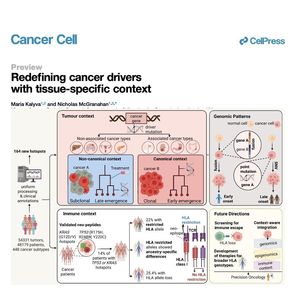
0A recent study of over 50,000 tumors across dozens of cancer types emphasizes that tissue-specific context determines how genetic mutations drive disease. By analyzing these samples, researchers identified over a hundred novel mutation hotspots that frequently appear early in tumor development, signaling their role in initiating cancer. The data reveals a distinction between canonical drivers, which typically emerge early in specific tissues, and non-canonical drivers that appear later as subclonal events. Furthermore, the findings suggest that clinical factors like age at diagnosis are linked to specific genetic signatures, such as gene fusions in younger patients. This research also highlights challenges for precision immunotherapy, noting that many patients lack the necessary immune profiles to recognize their specific mutations. Ultimately, the authors argue for a shift toward context-aware oncology, where treatment is informed by both a mutation and its unique biological environment.
References:
Kalyva M, McGranahan N. Redefining cancer drivers with tissue-specific context[J]. Cancer Cell, 2026.
