

 0
0 0
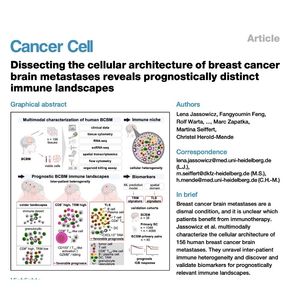
0This research explores the cellular architecture of breast cancer brain metastases (BCBM) by analyzing a large cohort of human tissue samples. Scientists utilized multimodal profiling, including single-cell sequencing and spatial transcriptomics, to identify how immune cell landscapes differ between patients. The study discovered that high densities of CD8+ T cells and the presence of tertiary lymphoid structures are strong indicators of better patient survival. These findings reveal that the immune environment of brain metastases is distinct from primary breast tumors, offering new ways to predict how patients might respond to treatment. By validating specific biomarkers, the authors provide a framework for improving immunotherapy strategies for this severe condition. Ultimately, the work highlights the clinical importance of immune heterogeneity in managing metastatic brain disease.
References:
Jassowicz L, Feng F, Warta R, et al. Dissecting the cellular architecture of breast cancer brain metastases reveals prognostically distinct immune landscapes[J]. Cancer Cell, 2026.
