

 0
0 0
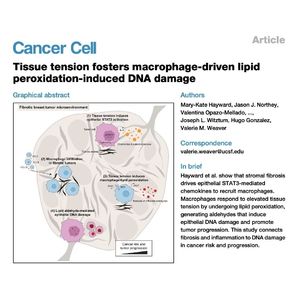
0This research explains how physical tissue tension within a fibrotic microenvironment drives cancer development and progression. The study demonstrates that stromal stiffness activates the STAT3 signaling pathway, which recruits macrophages to the tumor site. Once present, these macrophages react to the high-pressure environment by producing reactive oxygen species and lipid-derived aldehydes. These diffusible substances cause significant DNA damage to epithelial cells, increasing the mutational burden and metastatic potential of the tumor. Crucially, the findings link these mechanical and inflammatory processes to high mammographic breast density, offering a biological explanation for why stiffer tissues carry a higher lifetime risk of cancer.
References:
Hayward M K, Northey J J, Opazo-Mellado V, et al. Tissue tension fosters macrophage-driven lipid peroxidation-induced DNA damage[J]. Cancer Cell, 2026.
