

 0
0 0
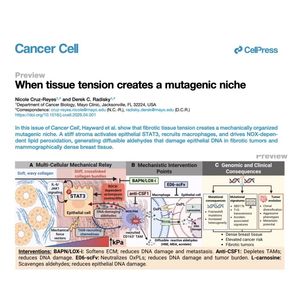
0Research highlights a groundbreaking discovery that physical tissue stiffness acts as a direct catalyst for genetic mutations in cancer. This process begins when a rigid extracellular environment triggers a cellular chain reaction, signaling epithelial cells to recruit inflammatory macrophages. These immune cells respond to the mechanical pressure by releasing genotoxic aldehydes and reactive oxygen species that physically damage nearby epithelial DNA. This finding shifts the understanding of fibrosis and high breast density, suggesting they are not just structural changes but active mutagenic niches. By identifying this mechanical relay, the study opens new therapeutic possibilities for preventing tumor evolution by targeting the biophysical forces of the cellular environment.
References:
Cruz-Reyes N, Radisky D C. When tissue tension creates a mutagenic niche[J]. Cancer Cell, 2026.
